(epipelagic: 0 - 100 metres)
(mesopelagic: 200 - 1,000 metres)
(bathypelagic: 1,000 - 4,000 metres)
(abyssopelagic: 4,000 - 6,000 metres)
(hadalpelagic: 6,000 - 11,000 metres)
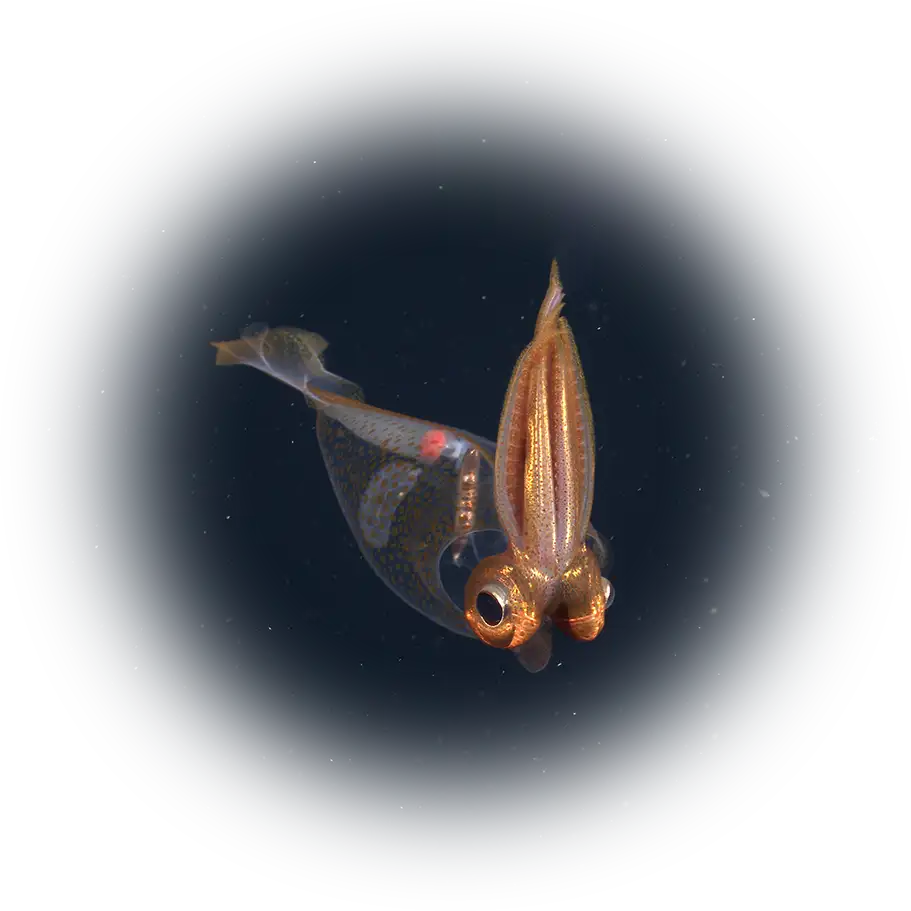
Cockatoo Squid
(Galiteuthis phyllura)

Blood Belly Comb Jelly
(Lampocteis cruentiventer)
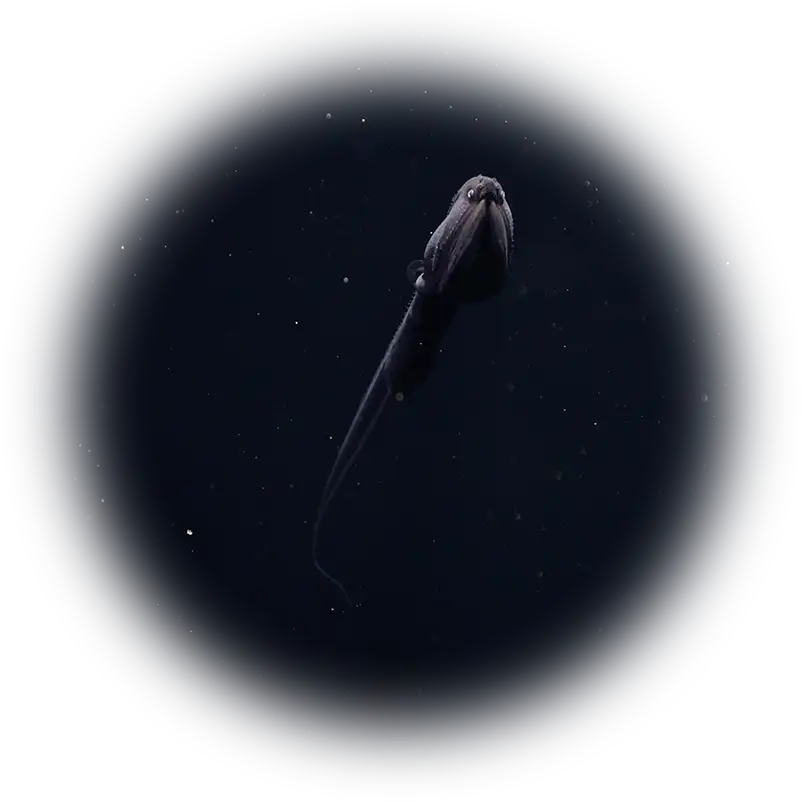
Whiptail Gulper Eel
(Saccopharynx lavenbergi)

Red Siphonophore
(Marrus claudanielis)

Deep sea squid with eggs
(Bathyteuthis berryi)
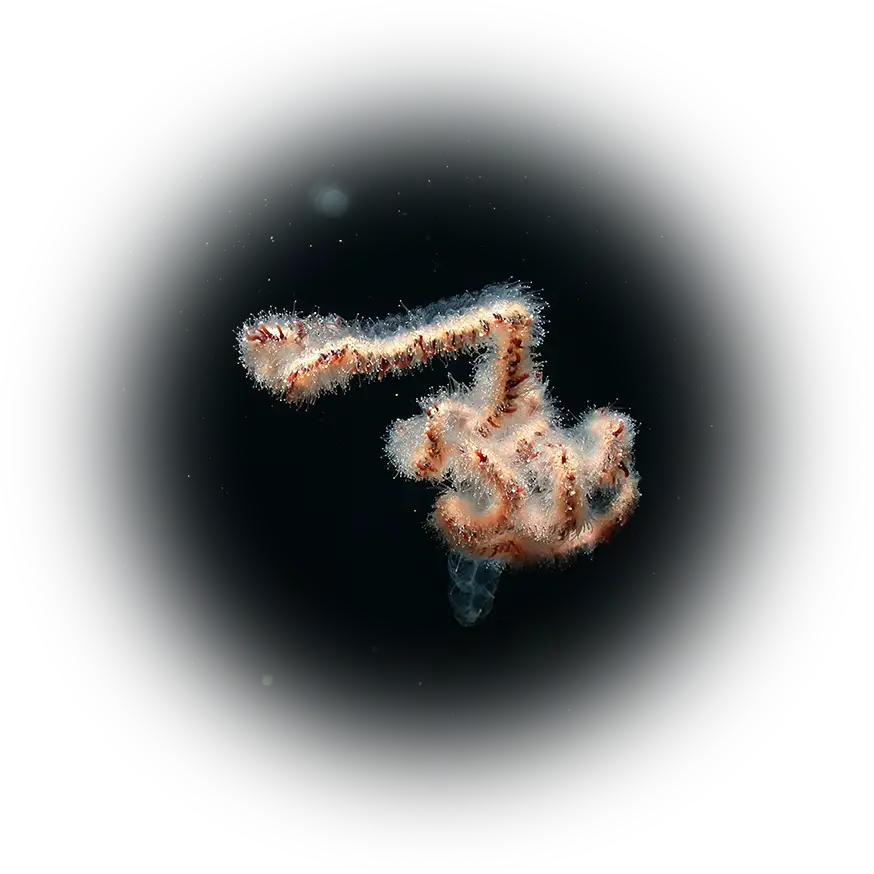
Woolly Siphonophore
(Apolemia lanosa)
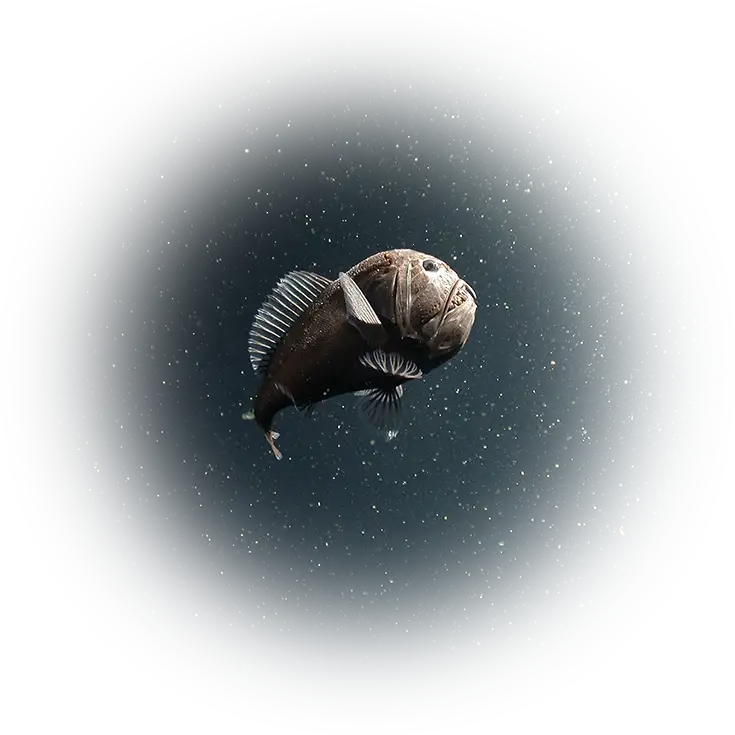
Common Fangtooth
(Anoplogaster cornuta)
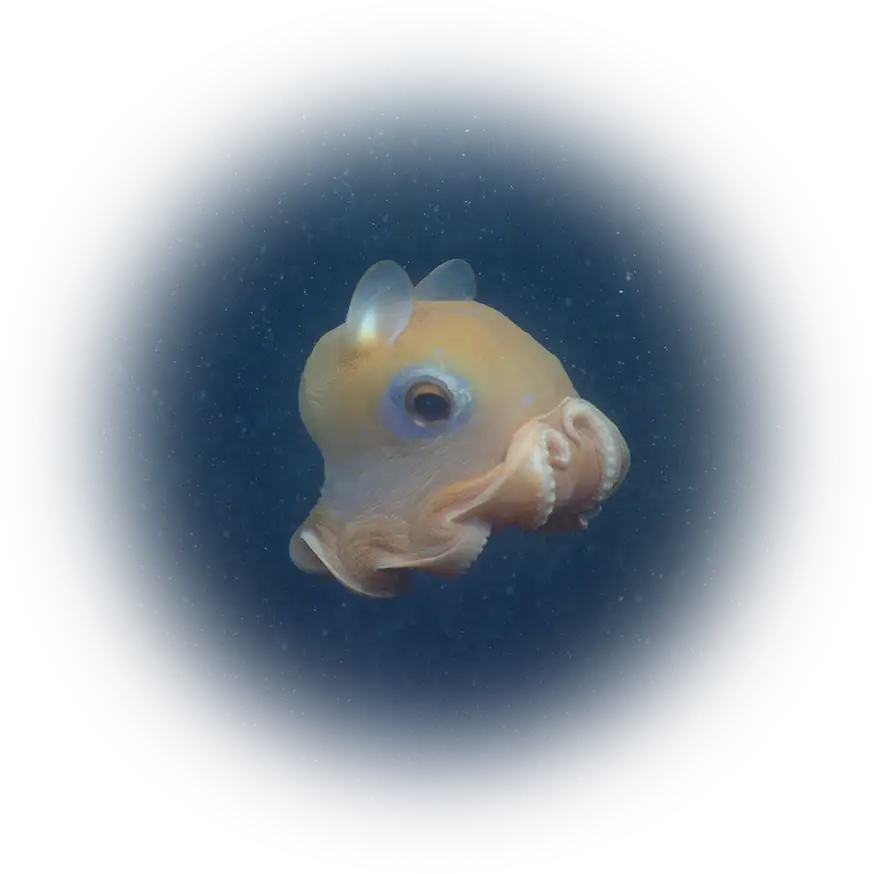
Flapjack octopus
(Opisthoteuthis sp.)

Abyssal Comb Jelly
(Beroe abyssicola)
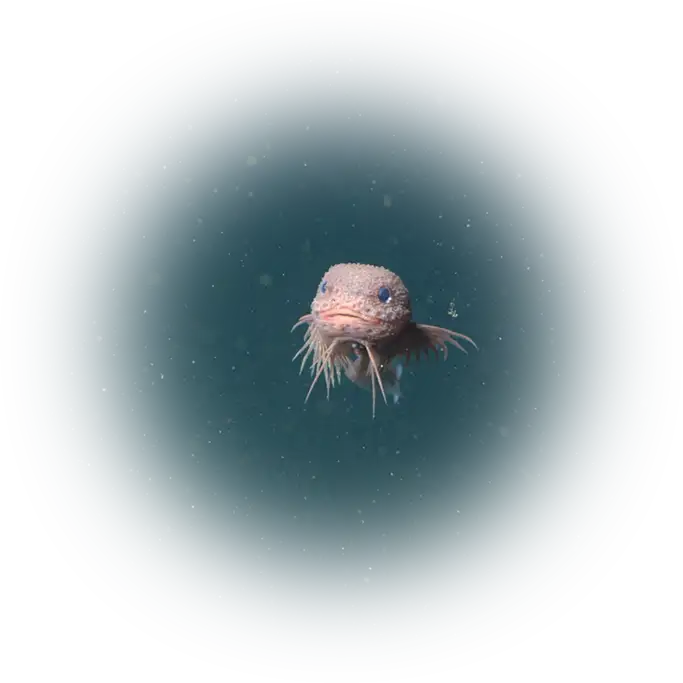
Bumpy Snailfish
(Careproctus colliculi)

Bioluminescent jellyfish
(Crossota millsae)
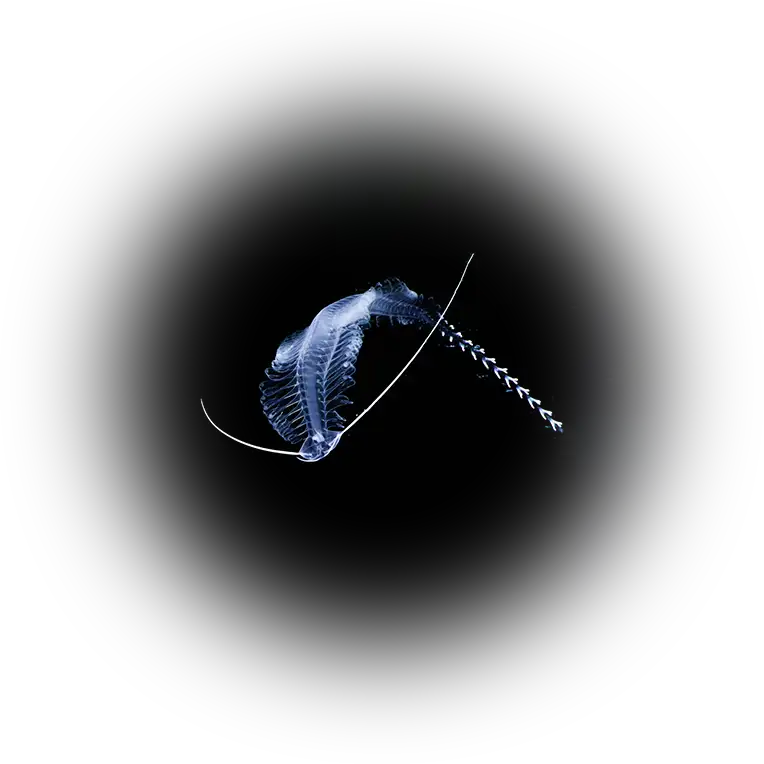
Gossamer Worm
(Tomopteris sp.)

Pacific Grenadier
(Coryphaenoides acrolepis)
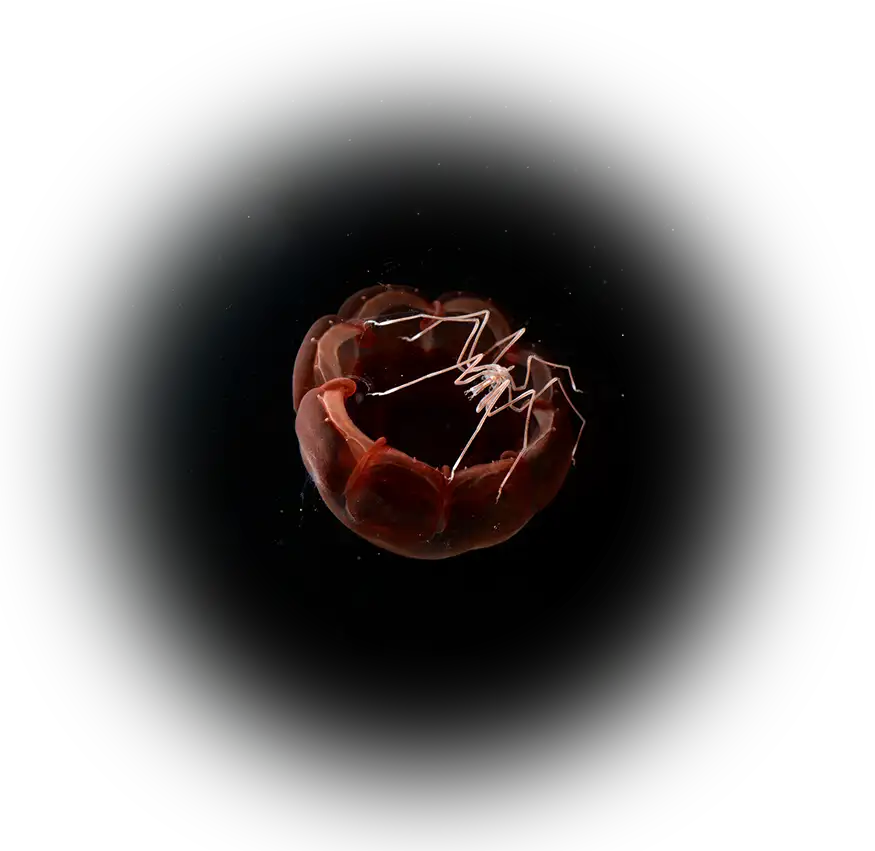
Unidentified Giant Sea Spider riding a
Raspberry Jelly (Aeginura sp.)
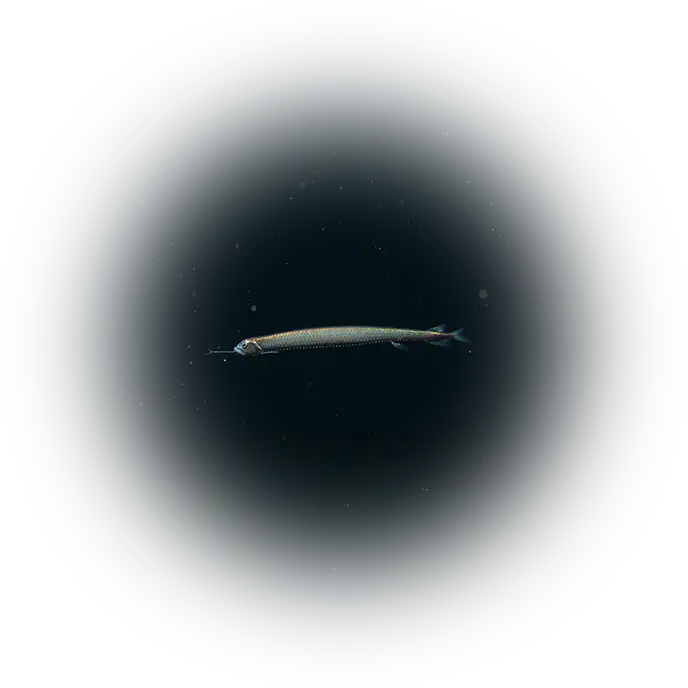
Black Belly Dragonfish
(Stomias atriventer)
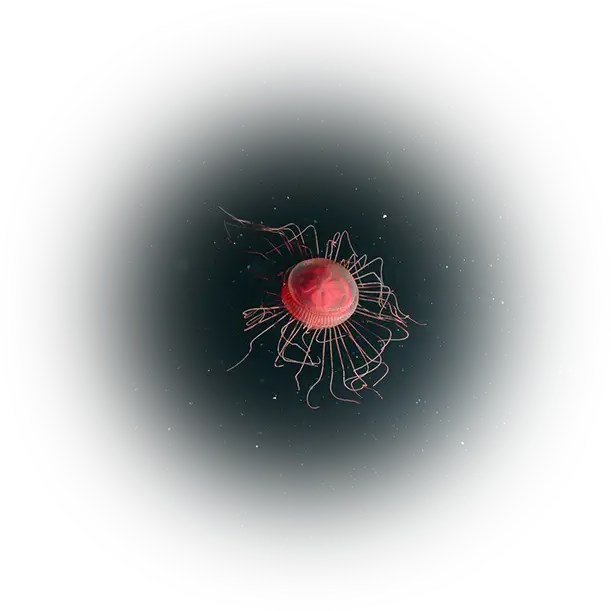
Deep Sea Crown Jelly
(Atolla sp.)
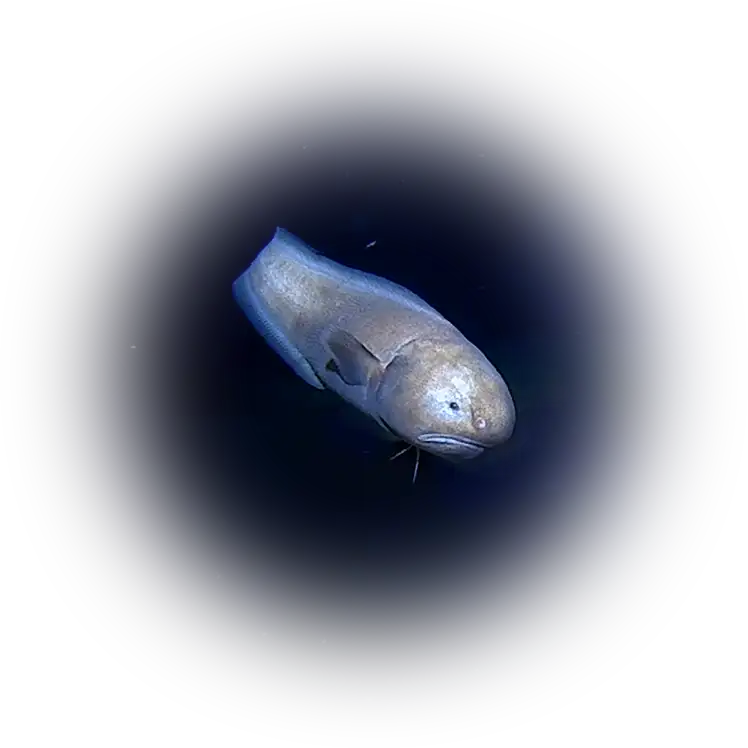
Unidentified Cusk Eel

Deep Sea Amphipod
(Eurythenes atacamensis)

Deep Sea Amphipod
(Eurythenes atacamensis)
7 things you didn’t know about the deep sea and why we must protect it from harm.
The deep sea is a vast and fragile ecosystem that helps regulate our climate and sustain life on Earth. Yet as deep-sea mining edges closer to reality, the world faces a defining question: will we protect what we still barely understand?
Did you know that we’ve invested more into space exploration than we have into exploration of the deep sea of our own planet?
We often look outward when we think about Earth’s final frontier, but one of the most mysterious and vital realms for life on our planet lies much closer to home – beneath the ocean’s surface.
Like space, the deep sea is extreme, difficult to access, and largely unexplored. Yet as deep-sea mining edges closer to reality, our attention must return to what’s here on Earth.
Decisions are now being made about ecosystems we’ve barely begun to explore, let alone understand — ecosystems that help sustain life as we know it.
Here are seven things to know about the deep sea, and why protecting it matters.
1
The deep sea covers more ocean than you may realise
The deep sea refers to ocean depths beyond 200 metres, stretching down to almost 11,000 metres (yes, you read that correctly!)
Together, these depths cover just over half of Earth’s surface, making the deep sea the largest living space on the planet.
Scientists divide the ocean into depth-defined zones:
- Sunlight zone (epipelagic: 0–100 metres)
- Twilight zone (mesopelagic: 200–1,000 metres)
- Midnight zone (bathypelagic: 1,000–4,000 metres)
- The Abyss (abyssopelagic: 4,000–6,000 metres)
- Trenches (hadalpelagic: 6,000–11,000 metres)
The abyssal zone is one of the largest habitats on Earth.
Incredibly, across all land and ocean surfaces, the average altitude of Earth sits at around 4,000 metres underwater – a reminder of just how vast our oceans really are.
2
It’s home to extraordinary life we’ve barely discovered
From glowing jellies and dumbo octopuses to ancient corals and giant sea spiders, the deep ocean is full of extraordinary life found nowhere else on Earth.
Scientists estimate there are hundreds of thousands to up to 1.5 million species [1] still waiting to be discovered in the deep. And with each expedition, new and often unexpected creatures are being uncovered all the time.
What’s even more remarkable is how interconnected these ecosystems appear to be. A recent study found that deep-sea invertebrates have quietly migrated across entire ocean basins over millions of years. Brittle stars (Ophiuroidea) — ancient, spiny marine animals — have been recorded from shallow coastal waters to the deepest abyssal plains, and from the equator to the poles.
The more we learn about these ecosystems, the more we understand their importance to the ocean as a whole.
And the more we discover, the clearer it becomes: the deep sea is full of life that deserves to be understood, valued and protected.
3
We’ve only seen a tiny fraction of it – and ignorance matters
Our understanding of deep-sea ecosystems lags behind shallower marine environments, largely because of the scale and difficulty of deep-sea research.
In fact, scientists estimate we’ve visually observed only 0.001 per cent [2] of it.
This is not due to a lack of interest, but because of real challenges:
- Scale: The deep-sea spans around 70 per cent of the planet, requiring many or long expeditions to study.
- Technical: At full ocean depth, pressure reaches around one tonne per square centimetre, and temperatures are near freezing.
- Access: Research depends on specialised open-ocean vessels, of which there are relatively few.
- Finance: Deep-sea science is costly and difficult to sustain at scale.
- Perception: The deep sea is often treated as “out of sight, out of mind”, with its value still underestimated or overlooked.
Yet distance does not equal irrelevance. The deep sea plays a critical role in the functioning of the entire ocean.
4
The deep sea is intricately connected to life in shallower waters
When we think about the deep sea, it’s easy to picture the seafloor in isolation. But deep-sea ecosystems are part of a continuous system that links the seabed, the midwater column, and the surface ocean.
The ocean’s midwaters (roughly 200–1,000 metres deep) contain an immense reservoir of life — including vast biomass of fish and plankton that form the foundation of ocean food webs.
These midwater ecosystems help sustain species higher up the food chain, from commercially harvested species like tuna to deep-diving marine mammals.
This matters for deep-sea mining, because the risks aren’t limited to the seabed. Mining activity can generate sediment plumes, noise, and dissolved pollutants that spread through the water column and travel well beyond the mining site. [3]
These disturbances may disrupt the delicate balance of midwater ecosystems — and in turn, the food webs that connect the deep ocean to life much closer to the surface. That’s precisely why the deep seas must not be disturbed, especially before strong, science-based environmental safeguards are in place.
5
Pacific Island communities are on the front line
For many Pacific Island nations, the deep ocean is not distant or abstract. It is central to culture, identity, and livelihoods.
Large areas targeted for deep-sea mining lie in the Pacific, including regions adjacent to or within the waters of island nations whose economies, food security, and traditions are deeply tied to a healthy ocean.
The risks of deep-sea mining do not respect political boundaries. Impacts in international waters may affect migratory species such as tuna, as well as marine ecosystems closer to shore, with real economic consequences for communities that rely on fisheries and tourism [4].
For many Pacific leaders, this is not just an environmental issue, but a question of fairness and sovereignty: who bears the risks, and who benefits from extraction? This perspective has helped drive growing calls from Pacific nations and civil society for a precautionary pause on deep-sea mining.
6
The deep sea plays a significant role in regulating our climate
The ocean is one of Earth’s greatest climate regulators.
It absorbs more than a quarter of human-caused CO2 emissions and around 90 per cent of the excess heat generated by global warming.
It also holds an enormous store of carbon — an estimated 38,000 billion tonnes — far more than is stored in the atmosphere and on land combined.
Most of this carbon is stored at deep ocean levels, making the deep seas the planet’s largest and most secure carbon sink.
The deep ocean stores carbon via two distinct routes:
- The solubility pump: Cold and dense waters absorb CO2 at high latitudes and sinks, carrying that carbon into the deep ocean.
- The biological pump: Phytoplankton (microscopic algae and other microorganisms) convert CO2 into organic matter at the surface of the ocean. Some of that carbon sinks through the ocean’s midwater layers toward the deep sea — where it can remain for hundreds to thousands of years.
This is why what happens in the deep ocean matters so much. When deep-sea ecosystems are disrupted, the impacts don’t stay out of sight — they can ripple through entire ecosystems.
So, how is the deep sea governed?
In international waters, the deep seabed is overseen by the International Seabed Authority (ISA) — a United Nations-established body responsible for both regulating mineral-related activity beyond national jurisdiction, and for protecting the deep-sea floor. These seabed areas are recognised as the common heritage of humankind.
To date, the ISA has not approved commercial deep-sea mining, but it has issued more than 30 exploration contracts.
Regulations for commercial mining are still being developed. And with so much scientific uncertainty remaining, it’s critical that any decisions are guided by evidence — with science leading the way, not following behind.
7
Deep sea mining risks irreversible harm before safeguards exists
Time and time again, we’ve seen what happens when human activity moves faster than science and governance: ecosystems are damaged before we’ve fully understood what they sustain – and recovery can take generations.
The deep sea is one of the last places on Earth where that story doesn’t have to repeat.
Why the rush to set rules doesn’t add up
While international rules for deep-sea mining are still under negotiation, a more immediate concern is emerging.
This includes growing efforts by some actors to move ahead through unilateral or alternative regulatory pathways, outside of globally agreed upon frameworks. These approaches risk bypassing precaution, weakening environmental oversight, and setting precedents that could open the deep sea to exploitation before science and safeguards are ready.
Proponents have argued that the minerals which can be found on the deep-sea floor are essential for the energy transition. Yet alternative technologies, new materials, and circular economy solutions are advancing rapidly — reinforcing that opening up a new extractive frontier is neither necessary nor responsible.
Finally, claims that deep-sea mining is required for national security overlook a core reality: long-term security depends on stable ocean systems, resilient supply chains, and strong international rules — all of which are weakened by rushing into high-risk extraction before safeguards exist.
That’s why we support a global moratorium on deep sea mining until there is sufficient scientific knowledge to understand the risks, and until robust, enforceable environmental safeguards can be developed and demonstrated to work in practice.
Instead of focusing on what we can extract from the deep sea, attention must be redirected to what we can protect within it.
Cusk Eel photo courtesy of Alan Jamieson.
Eurythenes photos courtesy of Alan Jamieson and Johanna Weston.
Trench seabed photo courtesy of Peng, X., Du, M., Gebruk, A. et al. Flourishing chemosynthetic
life at the greatest depths of hadal trenches. Nature 645, 679–685 (2025).
All other animal images courtesy of MBARI.
Sources
[1] Katherine L. C. Bell et al. ,How little we’ve seen: A visual coverage estimate of the deep
seafloor.Sci. Adv.11,eadp8602(2025).DOI:10.1126/sciadv.adp8602
[2] Roberto Danovaro, Cinzia Corinaldesi, Antonio Dell’Anno, Paul V.R. Snelgrove, The deep-sea under
global change, Current Biology, Volume 27, Issue 11, 2017
https://doi.org/10.1016/j.cub.2017.02.046.
[3] Dowd MH, Assad VE, Cazares-Nuesser AE, Drazen JC, Goetze E, White AE, Popp BN. Deep-sea mining
discharge can disrupt midwater food webs. Nat Commun. 2025 Nov 6;16(1):9575. doi:
10.1038/s41467-025-65411-w. PMID: 41198719; PMCID: PMC12592452.
[4] Amon D, Palacios-Abrantes J, Drazen J, Lily H, Nathan N, van der Grient J. Climate change to
drive increasing overlap between Pacific tuna fisheries and emerging deep-sea mining industry. npj Ocean
Sustain. 2023;2:1–8. https://doi.org/10.1038/s44183-023-00016-8