Imagine everyday sailors collecting high-quality scientific data about underwater life at a rate outpacing traditional research expeditions.
Most of our oceans are still biologically unexplored, especially in offshore and remote regions, because of the high costs and logistical challenges of traditional research expeditions.
So, could citizen sailors be the answer to filling this information and resource gap?

A new report published in Molecular Ecology found that environmental DNA (eDNA) collected by citizen seafarers can do just that, characterising 1.5 million km² of Pacific Ocean life.
During the 2024 Pacific Rally, a cruising rally for yachts and powerboats, 27 vessels were equipped with the tools to sample eDNA from largely uncharted open waters and delivered data across an area of the Pacific Ocean that would cover New South Wales and South Australia combined (see Figure 1).
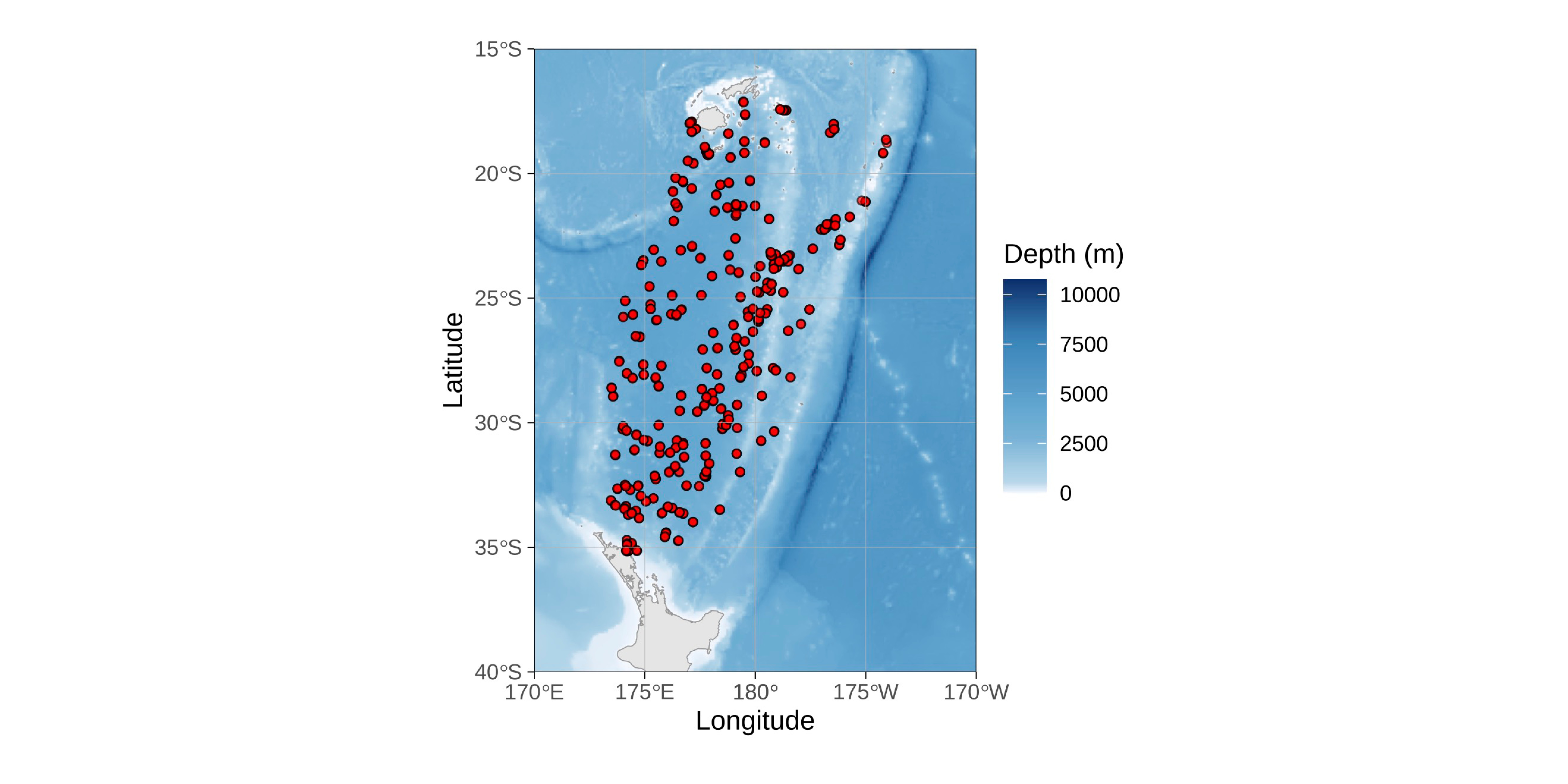
In doing this, they offered one of the most comprehensive eDNA baseline assessments of marine biodiversity in the open ocean between New Zealand and New Caledonia, achieving more extensive spatial coverage than traditional scientific expeditions typically can.
Researchers said that the data gathered by sailors provides the highest resolution picture of this part of the Pacific Ocean that they’re aware of, to date.
The accessibility of eDNA sampling
You might be wondering, how are regular citizens able to collect high-quality scientific data to rival research expeditions? Well, it's happening! And it's a true testament to the accessibility of eDNA sampling.
A simple sampling device and just a few minutes of towing through seawater can tell us so much of what we need to know about underwater species without ever needing to see or disturb them. Everyone from school-age children to those already venturing our big blue backyard can do it.
The report demonstrates that citizen science research design can sample large areas of open ocean biodiversity comprehensively and affordably.
Filling biological data gaps through citizen science would improve scientific understanding of complex ocean ecosystems and how these ecosystems are responding to climate change and increasing human-related stressors, such as pollution and overfishing.
- Author Dr Xavier Pochon, science leader at Citizens of the Sea and Honorary Associate Professor at the University of Auckland.
Each participating crew was trained to follow a standardised sampling process and equipped with a TorpeDNA sampler, a device that collects seawater samples while vessels travel at speeds of up to 12 knots.
Together, citizen sailors collected 728 samples in this single rally, with samples being chilled and transported to the Cawthron Institute in Aotearoa New Zealand for laboratory analysis. Since 2024, another two rallies have taken place with more seafarers contributing to science.
By examining traces of eDNA in the water left behind by marine organisms, researchers revealed thousands of different marine taxa, providing a detailed snapshot of biodiversity across a vast stretch of the southwest Pacific Ocean.
Beyond demonstrating the potential of citizen science to collect data across large areas of ocean, the study also explored how this information could complement what scientists can observe from space.
Satellites help researchers monitor ocean conditions, including the distribution of phytoplankton, microscopic organisms that form the foundation of marine food webs. But satellite observations have limitations, particularly when it comes to identifying different types of marine life.
By comparing the sailors' eDNA samples with satellite observations, researchers found that the two approaches aligned well for some groups of microorganisms, particularly cyanobacteria.
Other groups showed weaker matches, highlighting opportunities to improve how satellite data is interpreted and how eDNA samples are collected.
The findings suggest that citizen science could provide a valuable additional source of information to traditional research methods, helping scientists refine satellite observations and build a more accurate picture of marine biodiversity.

The research also uncovered clear geographical patterns in marine biodiversity, revealing how the composition of ocean life shifts across the southwest Pacific, from cooler temperate waters to warmer tropical regions.
While earlier studies had identified these patterns less clearly, the extensive coverage achieved through citizen science provided a more detailed view.
These findings have important implications for understanding how ocean ecosystems are changing.
With repeated sampling over time, citizen sailors could help scientists track shifts in marine biodiversity, including changes in where species are found, the arrival of invasive species, and the impacts of climate change.
As our oceans face growing pressures from warming waters, pollution and overfishing, understanding these changes are increasingly important.
By making it possible to collect scientific data across vast and often difficult-to-reach areas, citizen science offers a promising way to help close critical gaps in our understanding of ocean life.
And with sailors already travelling these waters, the opportunity to expand this approach could be significant.
Journal article source:
Saenz-Agudelo, P., Laroche, O., Knight, B., Bomati, E., & Pochon, X. (2026). Citizen sailors provide a detailed map of open-ocean surface biodiversity and help link eDNA data to satellite observations. Molecular Ecology, 35(19), e70571. https://doi.org/10.1111/mec.70571
Want to stay in the loop?
Subscribe to our monthly newsletter to keep up to date on our work to back community-led change, build a liveable future and keep people safe as technology advances.
By signing up with your email, you agree to Minderoo Foundation’s Privacy Policy.